
Applications
VITAHUM for vineyards
Vines grow where other crops will not – on slopes and stony, calcareous soils. The aim is rarely maximum yield; it is a balanced vine and ripe fruit.
Typical soil and agronomic challenges
Erosion on slopes
Heavy rain strips the most fertile layer from between the rows. Without organic matter the soil has nothing to hold itself together.
Drought during ripening
Most vineyards are not irrigated. A long summer drought stalls ripening and shrivels the berries.
Iron chlorosis
On limestone soils vines often suffer from iron deficiency even though iron is present in the soil.
The potential role of VITAHUM
What interests the vine grower is the product's soil qualities – structure, water retention, and binding soil into stable aggregates that resist erosion.
The stated 20–50% yield increase needs careful reading for wine varieties, where yield is deliberately restricted. Here the point is a more drought-resilient vine and more even ripening – and its effect on the fruit is for the grower or winemaker to judge on the individual site.
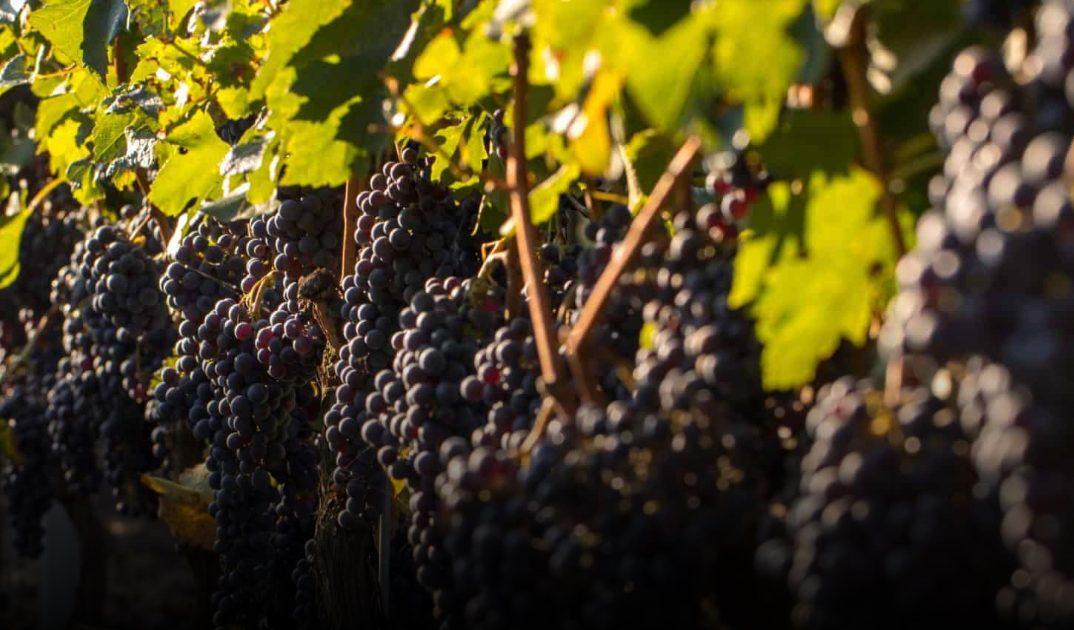
What to clarify together before application
- Wine or table grapes, and the target yield.
- Slope and management of the inter-rows.
- Active lime content and the rootstock in use.
We do not publish crop-specific rates, timings or programmes until they are confirmed by the product documentation. The stated working rate is 1 litre per decare (10 l/ha), applied in line with the technical documentation.
Other crops
- WheatMoisture for emergence and nitrogen efficiency.
- BarleyShallower roots, sensitive to acid and waterlogged soils.
- Oilseed rapeSmall seed, dry seedbeds and a taproot that hates compaction.
- SunflowerDeep roots, summer drought and herbicide carry-over.
- MaizePeak water demand in the hottest weeks.
- Vegetable cropsIntensive tillage, frequent irrigation, tired soil.
- OrchardsA soil you cannot swap for twenty years.
- Greenhouse productionClosed volume, salt build-up, year-round pressure.
Let's talk about your farm
Send an enquiry for a quote, a sample or a meeting – or call for a consultation. Quotes are individual and without obligation.