
Applications
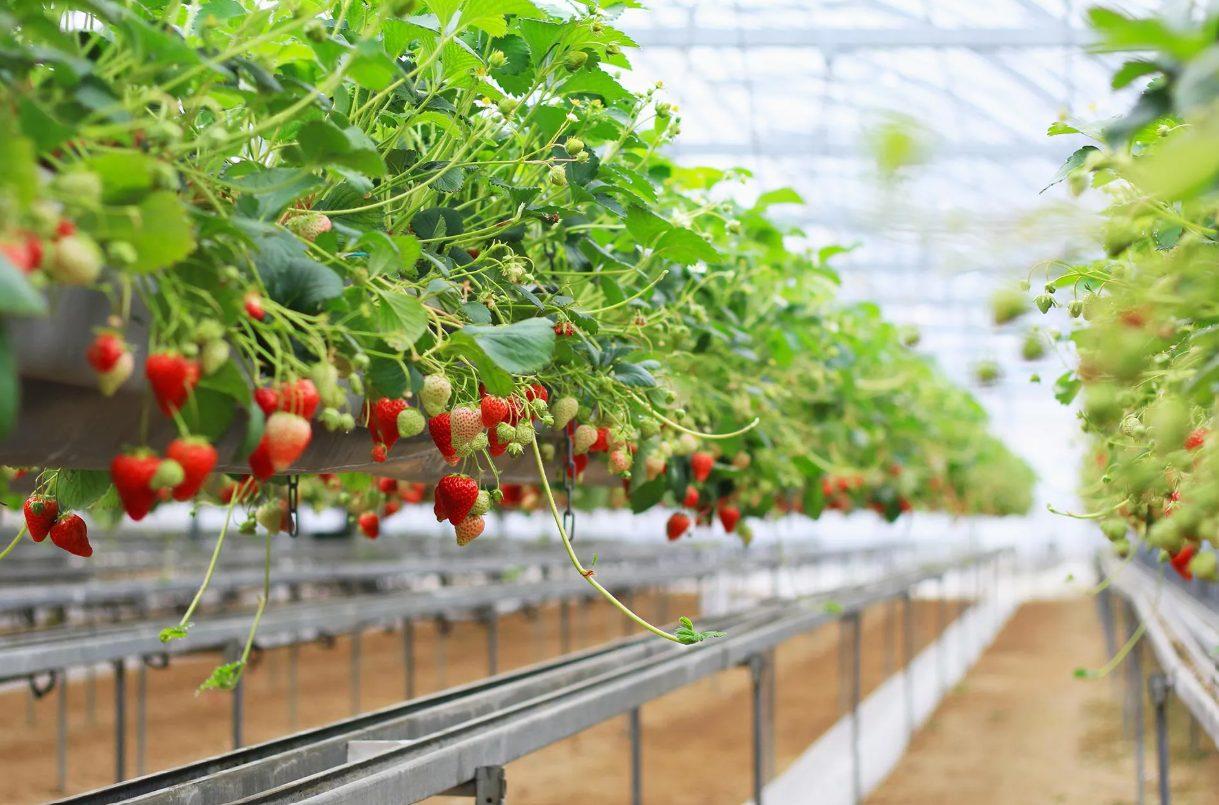
VITAHUM in greenhouse production
Greenhouse soil never sees rain. Everything applied with the irrigation water stays in it – nutrients and salts alike.
Typical soil and agronomic challenges
Salinity
With intensive fertigation and no leaching, soil electrical conductivity climbs with every crop cycle.
Monoculture
Tomatoes after tomatoes and cucumbers after cucumbers leave residues behind and upset the soil's biological balance.
Precision feeding
The nutrient solution is calculated to the milligram. Any addition has to be compatible with the system and must not shift pH unpredictably.
The potential role of VITAHUM
The stated qualities of supporting exchange processes in the soil and neutralising harmful chemical substances address the problems of confined greenhouse soil. The effect depends on the substances involved and on conditions.
Before the product goes into a fertigation programme, two things must be confirmed from the technical documentation: compatibility with the fertilisers in use, and the effect on solution pH, since the product is alkaline (publicly stated pH 9–12). Suitability for substrate growing is a separate question.
What to clarify together before application
- Soil-grown or substrate-grown crops.
- Electrical conductivity and pH of soil and irrigation water.
- Type of fertigation system and fertilisers used.
We do not publish crop-specific rates, timings or programmes until they are confirmed by the product documentation. The stated working rate is 1 litre per decare (10 l/ha), applied in line with the technical documentation.
Other crops
- WheatMoisture for emergence and nitrogen efficiency.
- BarleyShallower roots, sensitive to acid and waterlogged soils.
- Oilseed rapeSmall seed, dry seedbeds and a taproot that hates compaction.
- SunflowerDeep roots, summer drought and herbicide carry-over.
- MaizePeak water demand in the hottest weeks.
- Vegetable cropsIntensive tillage, frequent irrigation, tired soil.
- OrchardsA soil you cannot swap for twenty years.
- VineyardsSlopes, lean soils and the balance between vigour and quality.
Let's talk about your farm
Send an enquiry for a quote, a sample or a meeting – or call for a consultation. Quotes are individual and without obligation.